 KIDS RIDE-ON TOYS WHOLESALE
supplier / BUYER DESK
Assessing Ride-On Suppliers: Configuration Control
A factory-floor checklist for assessing a ride-on supplier's configuration control: door documents, sample checks, and records to take away before you order.
Published 2026-10-18
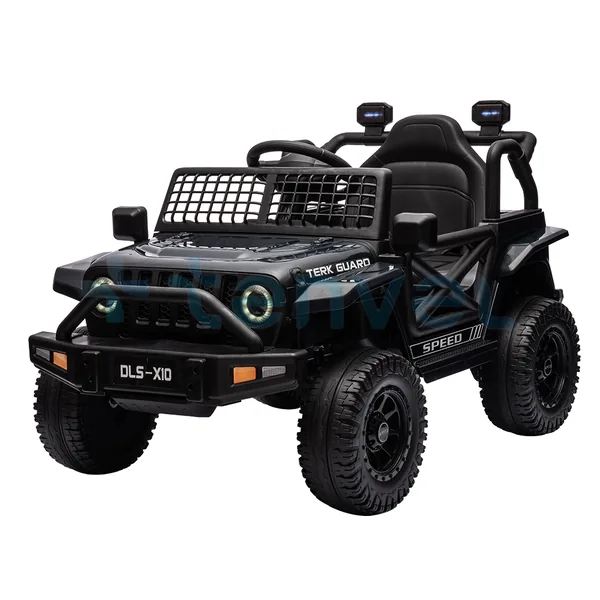
Assess a ride-on supplier's configuration control by treating every quotation as a claim that must survive three checkpoints in one factory visit: the documents you demand at the door, the physical sample you open on the bench, and the records you carry out before you leave. If the supplier's written SKU, its factory reference code, the sample in front of you, and the packing data do not line up, you are not looking at a quality problem. You are looking at a configuration problem, and it will repeat across the whole electric ride on cars wholesale order.
The sequence below is a buyer's method, not a factory ranking. It applies whether you are placing a first sample order or auditing a supplier you have already shipped with. The underlying discipline — identification, change control, status accounting, and audit — is the same configuration management framework used in aerospace and automotive manufacturing, and it translates cleanly to ride-on toys.
One caution. A quotation record is not certification, not licensing, not stock, and not factory capacity. When you see a quoted configuration, you have evidence that a supplier wrote something down. You do not yet have evidence that the unit on the line matches it.
product imageproduct imageproduct imageAt the door: which document do you check first?
Ask for the document that ties a company SKU to the supplier's own factory reference before you walk onto the floor. If that mapping does not exist in writing, stop the visit there and reschedule — without it, nothing you inspect later can be traced back to a purchase order.
In the catalog records behind this method, that mapping looks like this: a company SKU such as ROT-353516 carries a factory reference such as DLS-X5, and the quoted configuration is written against that reference, not against the marketing name. A second SKU, ROT-353539, carries DLS-X10a.b.c and notes three styles under one reference. A third, ROT-353541, carries DLS-X11. Three SKUs, three factory references, one named market variant — Southeast Asia — across all three.
That last point is the one buyers skip. The quoted configuration is tied to a destination market. Ask, in the room: is this reference valid for my market, or is it a Southeast Asia variant that will be re-specified for the EU or US? Get the answer in writing, on the same page as the reference code.
Then ask who the legal manufacturer is. According to the EU Toy Safety Directive 2009/48/EC, the manufacturer alone carries out the conformity assessment; an importer must be able to show the assessment was done, and any operator placing a toy under its own name or trademark is treated as the manufacturer. The General Product Safety Regulation (EU) 2023/988 is a separate instrument and should be mapped to the relevant market role as well. That determines whose name and address belong on the product, and it is not a detail you can settle after the visit.
On the sample: what do you open, and what do you ask?
Open the sample and read the configuration string against the quotation, field by field. Voltage, battery, motor count, unit size, carton quantity. On ROT-353539 the quotation states 12V, 12V4.5AH*1, 380*2, a 100*63*60 cm unit, one unit per carton. On ROT-353516 it states 390*2 instead. On ROT-353541 the voltage is given but the battery and motor fields are blank in the record. A blank is a gap, not a finding — ask whether the field was never recorded or the part is not fixed.
Then walk the feature list. Music, Bluetooth, lighting, 2.4G remote, three-speed control, dual drive, soft start and stop, four-wheel suspension, two-point seatbelt. Every one of those is a supplier-stated feature until you see it operate. Turn the unit on. Pair the remote. Cycle the speeds. Push the suspension. If a feature is listed and does not function on the sample, the configuration document is describing an intention, not a product.
The sentence to ask after the walkthrough is short: "Which of these features are fixed in the reference code, and which are optional add-ons?" That question separates a real configuration from a marketing description. Optional features are where cost drift and compliance drift both enter — a Bluetooth module or an added light is a changed product, and under general product safety principles, safety is expected to come from design and product features rather than warnings alone.
If the supplier can only show you a showroom unit and not a production unit from the current reference, note it. A showroom sample proves a factory can build one good unit. It does not prove the line is building them.
Before leaving: which records must go in your bag?
Leave with six items, or leave with a written list of what is missing. Missing means unknown — write it as unknown in your file, do not fill it from memory.
One: the SKU-to-factory-reference mapping, signed or stamped. Two: the configuration sheet for your destination market, not another market's sheet. Three: the packing and logistics record — carton type, units per carton, gross and net weight, unit dimensions. The catalog records show MOQ 30 and one unit per carton on the SKUs reviewed here, with weights ranging from roughly 6.65 kg gross on a small motorcycle unit to 30.4 kg gross on a forklift unit. Ask for the current figures rather than reusing an old quote.
Four: the variant control record. Where one reference covers several styles — the a.b.c case — ask which style you are buying and how the factory prevents a mixed shipment. Five: the change log. If a component or supplier changed since the last order, when, and was it re-tested? This is the document that most factories do not maintain, and its absence is itself information.
Six: the compliance document boundary. Ask for the test reports and certificates that apply to your SKU and destination, then check that the report names the product configuration, the age grade, and the standard edition it was tested against. According to the US consumer product safety authority, a Children's Product Certificate is product-specific and should not be presented as a blanket factory certificate. If the supplier offers a folder of certificates with no SKU on them, you have marketing material, not evidence.
The same discipline applies whether you are buying a single container or testing one SKU. Ride-on catalogues run deep — an Electric Off-Road SUV Ride-On can sit inside a family of a dozen near-identical records — so the mapping document matters more, not less, as the range grows.
Last question: end-of-line testing. Does every unit get switched on and functionally checked before it is boxed, and is that check logged against the unit or the batch? A supplier who can answer this without leaving the room has configuration control. One who cannot is running on operator memory.
FAQ
What is configuration control in a ride-on factory context?
It is the discipline that keeps every built unit matching the written specification and the destination-market variant, covering identification, change control, status accounting, and audits. In practice it means a company SKU maps to a factory reference code, that reference carries a fixed configuration for a named market, and any change to it is recorded and re-verified.
Can I accept a supplier's certificate as proof of compliance?
No. A certificate or test report has to name the specific product configuration, the age grade, and the standard edition it was tested against. A Children's Product Certificate is product-specific and should not be treated as a blanket factory certificate, and a standard or guidance page never proves that a particular factory or SKU is certified.
The quotation is missing battery and motor fields — is that a red flag?
Treat it as an unrecorded field, not automatically a negative finding. Ask the supplier directly whether the field was never captured or the component is not fixed for that reference, and get the answer in writing before you compare it with other SKUs. A blank in a record is a gap in evidence; it only becomes a risk if the supplier cannot resolve it.
How do I handle one factory reference that covers several styles?
Ask which style your purchase order is for, how the factory separates them on the line and in packing, and whether the styles share identical configuration. A reference covering three styles is not a problem by itself, but you need a written control that prevents a mixed shipment and a stated answer on whether the configurations are truly identical.
What should I do if the supplier has no change log?
Record the absence as unknown evidence and decide whether it is acceptable for your order size and risk level. A missing change log does not automatically disqualify a factory, but it means you cannot verify whether a component substitution happened after testing — which is exactly the scenario that turns a compliant SKU into a non-compliant shipment.
Does this method apply to a supplier I have already shipped with?
Yes, and it is more valuable there. Running the same three checkpoints against a live supplier — document mapping, sample versus quotation, records out the door — is how you detect configuration drift between production runs rather than discovering it in a customer complaint.
Sources
Related Products & Categories
Request a Quote
Send the SKU, destination market, and the documents you already have.
Continue the buying conversation
Compare the ride-on range, packing references and product files before requesting a quotation.