 KIDS RIDE-ON TOYS WHOLESALE
supplier / BUYER DESK
Power Wheels Barbie Dream Camper: Approve Packaging?
Use the 2019 Barbie Dream Camper recall to review model identity, pedal-release claims, supplier evidence, and packaging approval conditions.
Published 2026-11-16
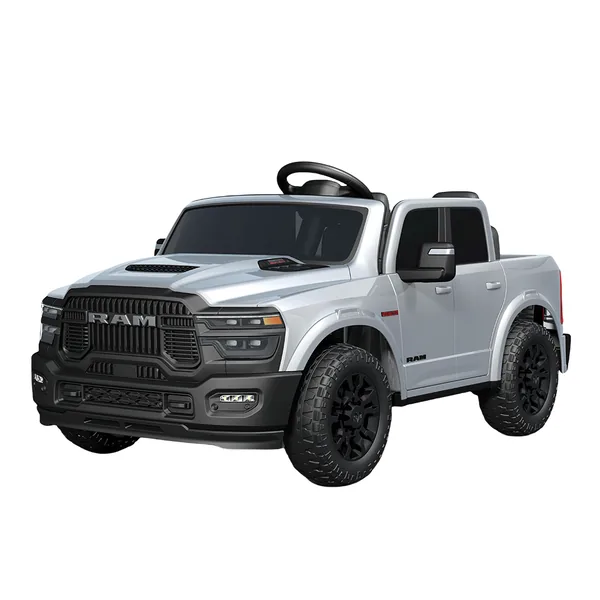
Approve electric ride-on toy packaging only when its model identity matches the reviewed configuration and its safety claims have item-specific support. For wholesale electric ride-on toy buyers, the 2019 Power Wheels Barbie Dream Camper case supplies a precise review question: what evidence supports the vehicle’s response when the foot pedal is released? Match the platform, representative retail item, product label, and carton revision first; hold unsupported stopping claims rather than treating the historical recall as proof about another model.
product imageproduct imageproduct imagePower Wheels Barbie Dream Camper FRC29
| Named external product | Children’s Power Wheels Barbie Dream Campers |
|---|---|
| Model identifier | FRC29 |
| Model-label location | Under the hood |
| Appearance identifiers | Hot pink body, blue accents, and Barbie logo on the back |
| Official recall publication | February 5, 2019; recall 19-058 |
| Published hazard | The children’s ride-on Power Wheels can continue to run after the foot pedal is released, posing an injury hazard. |
What must the artwork identify before safety claims are reviewed?
The artwork review must identify one exact model configuration, not merely a camper-shaped vehicle or a shared marketing name.
Record the supplier’s model/platform designation, representative SKU cross-reference, riding structure, control arrangement, and configuration revision. Connect those identifiers to the product-label photograph, manual revision, retail-carton reference, and artwork revision. Keep the identity panel separate from promotional copy so a renamed range does not obscure which vehicle was reviewed.
For a candidate in Theme & Specialty Rides, establish whether the child drives through a foot pedal and whether other driving modes or remote-control functions exist. Apply the pedal-release question only to a comparable mechanism. Do not assume that a camper body, pink color, or similar carton illustration establishes a shared electrical platform.
Keep failure to stop separate from controller overheating. A temperature report does not establish pedal-release behavior, and a stopping demonstration does not establish thermal protection. The 2019 hazard description does not identify a particular battery, motor, or controller as its cause.
Identity matching supports traceability. It does not, by itself, detect an undisclosed component change or demonstrate that the stopping function works.
Which supplier documents should be requested before approving claims?
Request documents that connect each proposed claim to the candidate’s actual construction, operating modes, and destination market.
For pedal-release behavior, ask: “Which report covers this model and control-system revision? What happened after pedal release in each applicable driving mode? Please provide the test method, acceptance criteria, results, and identification of the tested sample.” Request the recorded stopping response, not only a video captioned “brake test.” Any stopping-time or distance limit used for purchasing acceptance should be explicitly agreed as a buyer criterion, not presented as a universal compliance threshold.
For configuration matching, ask: “Which battery, motor, pedal assembly, and controller versions were assessed, and how do they correspond to the offered vehicle?” A report may cover multiple variants when its scope supports that coverage; a different internal item number does not automatically require a new test.
For age and performance copy, request the age-grading rationale and references supporting the proposed age range, speed, rider load, and battery statements. Confirm that carton, manual, product label, and quotation describe the same configuration.
For certification or conformity wording, request the exact proposed wording, supporting report or declaration, covered model, applicable standard edition, destination market, and responsible issuer. Review US and EU packaging separately rather than assuming one claim serves both markets. If licensed characters or logos are proposed, request written authorization covering the product, territory, and intended use.
These are purchasing review questions, not a declaration of statutory marking requirements. The historical recall supplies none of these approvals for a candidate model.
Hypothetical Camper A artwork review record
This hypothetical review ends in HOLD because descriptive identity can be checked while stopping, age, and certification claims still require resolution. It illustrates a pedal-operated, battery-powered camper-style ride-on—not an actual catalog item, supplier project, or completed test. All model, SKU, and document identifiers below are illustrative.
Record identity — Platform: Camper A. Supplier model designation for this example: HYP-CA-01. Representative SKU: HYP-CA-PINK-01, Camper A Pink. Riding structure: seated camper-style ride-on with foot-pedal drive. Configuration reference: review sample A, configuration revision A. Product-label location: under the hood in this example. Carton reference: Camper A retail carton, artwork revision A; the carton identity panel carries the model designation and representative SKU separately from promotional copy. Decision date: October 28, 2026. Responsible decision-maker: retail packaging approval lead. Open identity condition: supplier technical contact must confirm that the recorded model/SKU pair maps to the reviewed configuration before release.
Identity check — Specified target: the product label, manual, carton identity panel, and configuration record identify the same vehicle. Assumed observation: the sample photographs and carton show model HYP-CA-01, and the carton identifies SKU HYP-CA-PINK-01, but the supplier’s cross-reference to configuration revision A remains an open action. Result: HOLD identity sign-off until that linkage is recorded; the visible identifier match remains useful traceability evidence, not proof of configuration equivalence or stopping performance.
Descriptive copy — Proposed wording: “Pink camper-style ride-on.” Specified target: wording and illustration match the reviewed exterior. Assumed observation: the sample photographs show a pink camper-style body. Claim status: SUPPORTED for this descriptive wording only. Evidence reference: illustrative sample photograph set A. This does not establish color availability or inventory.
Pedal-release claim — Proposed wording: “Release pedal to stop.” Specified target: wording accurately describes the assessed response of the offered control configuration. Assumed observation: artwork revision A contains the statement; the stop-function report is an open supplier action. Claim status: HOLD. Published hazard reference: continued running after foot-pedal release in the named 2019 FRC29 recall. Closure: supplier technical contact supplies the applicable report; the technical reviewer checks sample identity, method, results, and wording before sign-off. Do not interpret this statement as an untested promise of an instantaneous stop.
Thermal claim — Proposed wording: “Overheat protection.” Specified target: separate evidence supports the protection described for the offered electrical configuration. Assumed observation: the artwork contains the claim, while its supporting report remains an open action. Claim status: HOLD. Closure: assess the thermal evidence independently or remove the claim. The pedal-release review cannot close this condition.
Certification and age copy — Proposed wording includes “Certified safe” and a provisional age statement. Claim status: REMOVE “Certified safe” because it is an undefined blanket assurance; HOLD the age statement pending the age-grading review. Open questions: which specific conformity wording is proposed for the destination, which document supports it, and which age assessment applies to this construction? The compliance reviewer owns these decisions.
Recorded decision — HOLD artwork revision A for model HYP-CA-01, representative SKU HYP-CA-PINK-01, configuration revision A; do not release the print file. Conditions: confirm the recorded model/SKU linkage to the reviewed configuration, resolve the pedal-release and thermal claims, remove the blanket safety assurance, and settle age and destination-specific wording. Packaging coordinator: issue revision B after agreed corrections. Follow-up closure: record each document reference, the reviewer’s conclusion, the revised artwork reference, and the actual closure date. Packaging approval lead: enter a new dated decision after re-review. No conditions are recorded as closed in this hypothetical.
When should a buyer approve, hold, or return the artwork?
Approve matched and supported artwork, hold unresolved evidence-dependent claims, and return artwork that needs identifiable corrections.
APPROVE only the recorded revision after model identity, claim support, and the relevant packaging review are accepted. HOLD when a material question—such as pedal-release behavior or report coverage—remains open. RETURN when the file needs correction, such as the wrong model identifier, mismatched vehicle image, or unsupported blanket safety wording; list the changes and require re-review.
Treat these as artwork decisions, not findings that a vehicle is safe or unsafe. Removing an unsupported claim does not resolve a product-performance question, and a missing document does not prove a defect. The transferable lesson from FRC29 is narrower and more useful: identify the exact vehicle, ask about the exact stopping mechanism, and keep every approval tied to its evidence and revision.
Continue the buying conversation
Compare the ride-on range, packing references and product files before requesting a quotation.